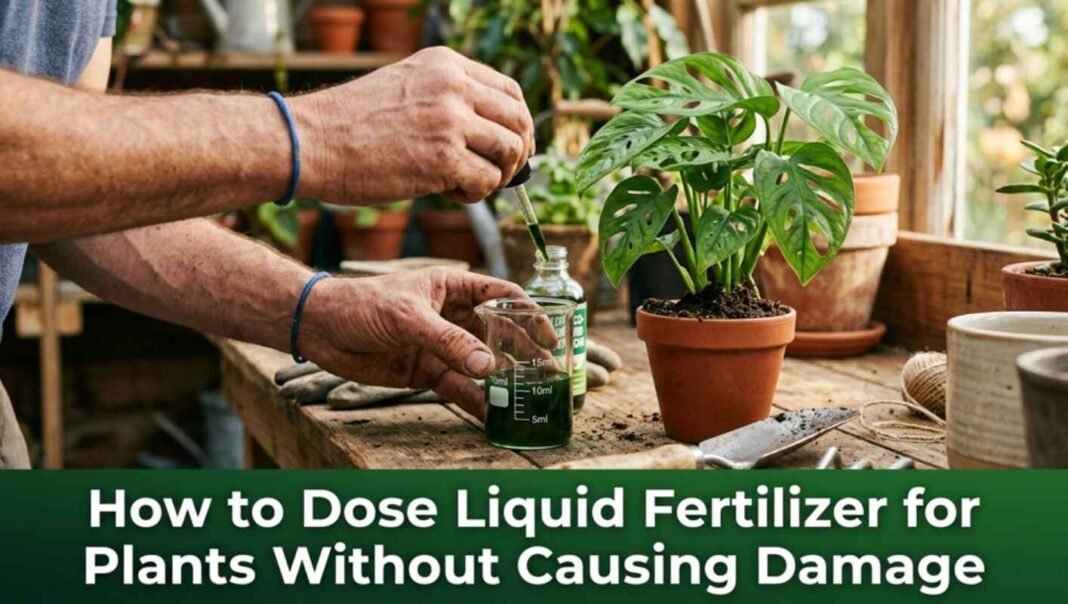

You grabbed a bottle of liquid fertilizer, read “dilute before use and thought — how much is too much?
That moment of uncertainty is more common than you’d think. Over-fertilizing is one of the top reasons houseplants and garden beds decline, even with the best intentions. Yellowing leaves, brown tips, wilting — all signs that your plant got too much of a good thing.
The good news? Liquid fertilizer is actually one of the easiest forms to control, once you understand the basics. This guide will walk you through exactly how to dose liquid fertilizer for plants — safely, simply, and effectively.
What Is Liquid Fertilizer and Why Does Dosing Matter?
Liquid fertilizers are nutrient solutions you mix with water before applying to your plants. They’re fast-acting, flexible, and available in both synthetic and organic forms.
The most common types include:
- Concentrated liquids (you dilute these, usually 1 tsp per gallon)
- Ready-to-use sprays (pre-diluted, no measuring needed)
- Liquid fish emulsion (organic, mild, great for vegetables)
- Seaweed extracts (growth stimulants and stress reducers)
Dosing matters because plants absorb nutrients through their roots. Too little and they starve. Too much and the mineral salts in fertilizer draw moisture out of roots — a process called fertilizer burn — causing wilting, leaf scorch, and even plant death.
How to Read a Fertilizer Label
Every fertilizer label carries three critical numbers — the NPK ratio. This stands for:
| Letter | Nutrient | Role |
| N | Nitrogen | Leaf and stem growth |
| P | Phosphorus | Root and flower development |
| K | Potassium | Overall plant health and disease resistance |
A label reading 5-10-5 means 5% nitrogen, 10% phosphorus, 5% potassium.
Pro tip: High-nitrogen fertilizers (like 20-0-0) push leafy growth. If you’re growing tomatoes or roses, look for a balanced or bloom-boosting formula.
Always follow the manufacturer’s dilution rate first. Then adjust based on your plant’s response over 2–3 weeks.
How to Dose Liquid Fertilizer Step by Step
Here’s the exact process:
Step 1: Start with the Recommended Dose — Then Go Half
Beginners should always start at half the label dose. This is especially true for:
- Indoor houseplants (more sensitive than outdoor plants)
- Newly repotted plants (roots need recovery time)
- Plants showing signs of stress
Many experts, including those at Penn State Extension, recommend erring on the side of less fertilizer more frequently rather than large doses infrequently.
Step 2: Measure Precisely
Use a measuring spoon or a small graduated cup. Don’t eyeball it.
Common starting ratios for liquid concentrate:
- Houseplants: ½ tsp per gallon of water
- Vegetables: 1 tsp per gallon
- Flowering plants: 1 tsp per gallon every 2 weeks
Step 3: Mix Thoroughly
Always add fertilizer to water, not the other way around. Stir or shake until completely dissolved.
Step 4: Water First, Then Fertilize
Apply liquid fertilizer to moist soil, not dry. Dry roots absorb fertilizer more aggressively, increasing the risk of burn. Water lightly first, wait 30 minutes, then apply your solution.
Step 5: Watch for Response
Give your plant 1–2 weeks before adjusting. Signs of good response:
- Deeper green color
- New growth emerging
- Increased stem firmness
Signs you overdid it:
- Yellowing leaf edges
- White crusty residue on soil surface
- Wilting despite moist soil
Organic vs. Synthetic Liquid Fertilizers: Which Is Safer to Dose?
| Feature | Organic | Synthetic |
| Burn risk | Low | Higher |
| Speed | Slow release | Fast acting |
| Soil health | Improves over time | Neutral to harmful long-term |
| Cost | Usually higher | Often cheaper |
Organic fertilizers like fish emulsion or kelp extract are more forgiving because nutrients release slowly. They’re excellent for beginners.
Synthetic fertilizers are more potent and faster-acting — great for plants with specific deficiencies but require more precision.
Common Liquid Fertilizer Dosing Mistakes
Avoid these common errors:
- Fertilizing dry soil — always pre-moisten
- Fertilizing dormant plants — winter rest means no feeding needed
- Using the same dose for all plants — succulents need far less than tomatoes
- Skipping a dilution step — concentrates can be 10–20x too strong undiluted
- Fertilizing sick or root-bound plants — address the problem first
Expert Tips for Liquid Fertilizer Dosing
1: Use a soil EC (electrical conductivity) meter to measure nutrient levels in your soil. This takes the guesswork out entirely.
2: For foliar feeding (spraying leaves), dilute to ¼ of the recommended dose to avoid leaf burn. Apply in the morning so leaves dry before heat sets in.
3: Flush your soil with plain water every 4–6 weeks to clear out salt buildup from fertilizers. This is called leaching and is especially important for potted plants.
FAQs:
1: Can I use liquid fertilizer every time I water?
Not recommended. Most plants do well with feeding every 2–4 weeks during active growth. Over-feeding causes nutrient toxicity and salt buildup.
2: What happens if I give too much liquid fertilizer?
You risk fertilizer burn — roots are damaged by salt concentration. Flush the soil immediately with plain water if you suspect overdose.
3: Do I need to fertilize if I use fresh potting mix?
Fresh potting mix often contains slow-release fertilizer for 3–6 months. Read the bag label before adding more.
4: Is liquid fertilizer better than granular for potted plants?
Liquid is generally preferred for containers because it distributes evenly and allows precise control. University of Illinois Extension covers this in depth.
5: Can I use the same liquid fertilizer for all my plants?
A balanced fertilizer (10-10-10 or similar) works for most plants, but flowering and fruiting plants benefit from higher phosphorus formulas during their bloom phase.
Conclusion
Dosing liquid fertilizer doesn’t have to be intimidating. Start with half the recommended dose, water your plants before applying, and watch how they respond. Every plant has its own needs — and you’ll learn those needs faster than you think.
The most important rule? Less is more, especially at the start.
Ready to feed your plants the right way? Start with a high-quality balanced liquid fertilizer, pick up a measuring spoon, and begin with half the recommended dose. Your plants will thank you.

Welcome to our site. I am admin of TalkInformation.com, an AI-Powered SEO, And Content Writer with 4 years of experience. I help websites rank higher, grow traffic, and look amazing, my goal is to make seo and web design simple and effective for everyone. let’s achieve more together!